
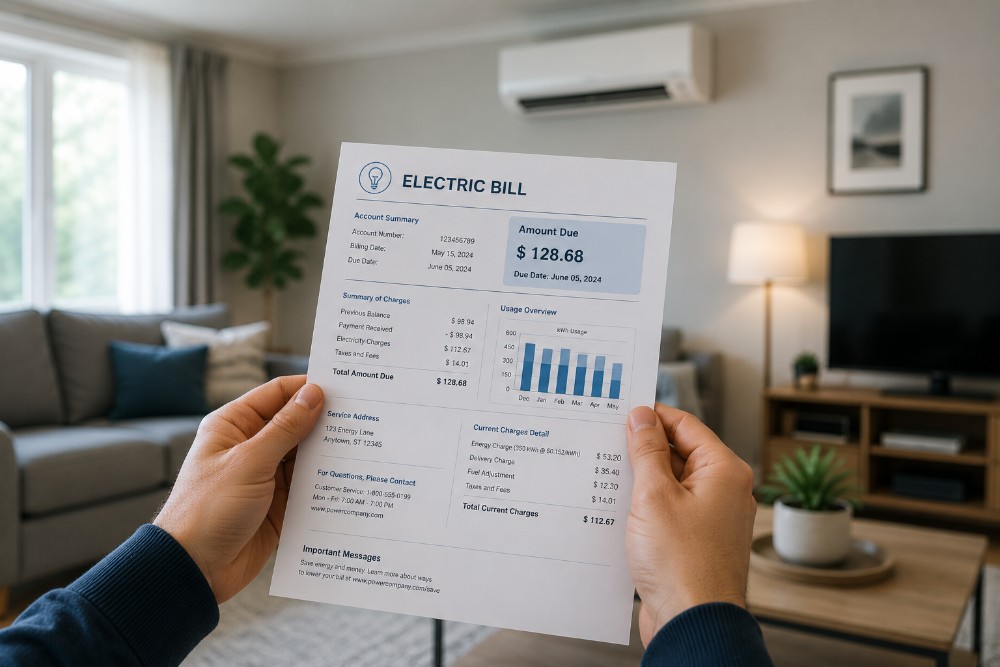
Your HVAC system is typically the largest single expense on your energy bill, which also means it’s the place with the most room for savings. You don’t need a new system to start cutting costs, just a few smarter habits.
Adjust Your Thermostat by a Few Degrees
Setting your thermostat just a couple of degrees warmer in summer or cooler in winter can meaningfully reduce energy use over a month without a noticeable comfort difference.
Use a Programmable or Smart Thermostat
Scheduling temperature changes around your daily routine, warmer while you’re away, comfortable when you’re home, avoids paying to condition an empty house.
Replace Filters on Schedule
A clogged filter forces your system to work harder to move the same amount of air. Replacing filters every 60-90 days keeps airflow, and efficiency, where it should be.
Seal Gaps Around Windows and Doors
Conditioned air escaping through small gaps means your system runs longer to maintain temperature. Weatherstripping and caulk are inexpensive fixes with a real impact.
Even a well-maintained system loses efficiency if the building envelope around it is leaking conditioned air.
Keep Vents and Registers Unblocked
Furniture, rugs, and curtains covering vents restrict airflow and make your system work harder to reach the same temperature throughout your home.
Schedule Annual Maintenance
A tuned-up system runs more efficiently than one with dirty coils, low refrigerant, or worn components. Annual maintenance pays for itself in energy savings over time.
Use Ceiling Fans to Support Your HVAC System
Fans help circulate conditioned air more evenly, letting you raise or lower the thermostat by a degree or two while feeling just as comfortable.
Add or Upgrade Insulation
Poor insulation lets conditioned air escape and outdoor temperatures creep in, forcing your HVAC system to run more often than it should.
Shade Your Outdoor Unit
An outdoor condenser working in direct, intense sun uses more energy to dissipate heat. Shading it, without blocking airflow, can improve efficiency.
Consider a System Upgrade
If your HVAC system is over 12-15 years old, a high-efficiency replacement may pay for itself faster than expected through reduced monthly energy costs.
When to Call a Professional
Simple habit changes are safe to try on your own. If your bills remain high despite these steps, a professional energy assessment can identify less obvious inefficiencies in your system.
