
Indoor air can be more polluted than outdoor air, especially in tightly sealed, energy-efficient homes. The good news is that improving it doesn’t require a major renovation, just a few targeted changes to how your home breathes.
Upgrade Your Air Filter
A standard one-inch filter captures only a fraction of airborne particles. Upgrading to a higher-MERV-rated filter, sized correctly for your system, captures significantly more dust, pollen, and pet dander.
Keep Humidity in the Ideal Range
Indoor humidity between 30% and 50% helps prevent mold growth while avoiding the dryness that irritates skin and airways. A whole-home humidifier or dehumidifier can help maintain that balance automatically.
Schedule Regular Duct Cleaning
Ducts accumulate dust and debris over time, circulating it through your home every time your system runs. Periodic cleaning removes buildup at the source rather than just filtering it after the fact.
Air quality improvements work best in combination. A better filter paired with balanced humidity and clean ductwork addresses far more than any single change on its own.
Ventilate When Possible
Opening windows when outdoor air quality is good helps dilute indoor pollutants that build up over time, including VOCs from cleaning products, furniture, and paint.
Consider Whole-Home Air Purification
For households dealing with allergies, asthma, or persistent odors, a whole-home air purification system integrated with your HVAC ductwork treats air throughout every room, not just one space.
Reduce Indoor Pollutant Sources
Simple habits, like using low-VOC cleaning products, maintaining a smoke-free home, and vacuuming with a HEPA-filtered vacuum, reduce the amount of pollutants your HVAC system has to manage.
Keep Your HVAC System Well Maintained
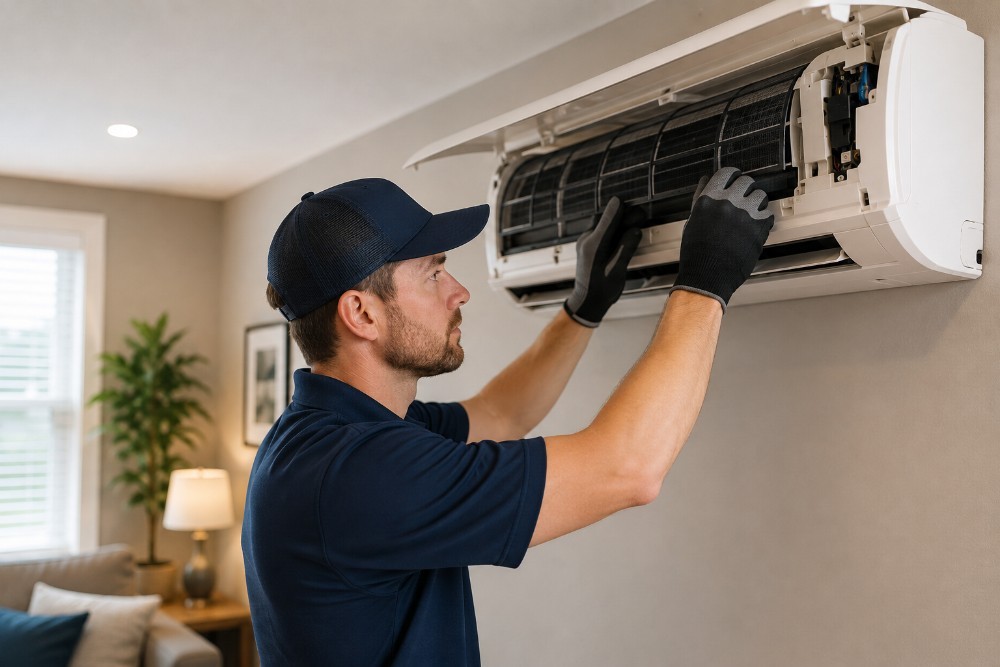
A system with clean coils and properly functioning components doesn’t just run more efficiently, it also does a better job managing the air quality throughout your home.
When to Call a Professional
If allergy symptoms, odors, or humidity issues persist despite these changes, an HVAC technician can assess your system and recommend targeted air quality solutions suited to your home.