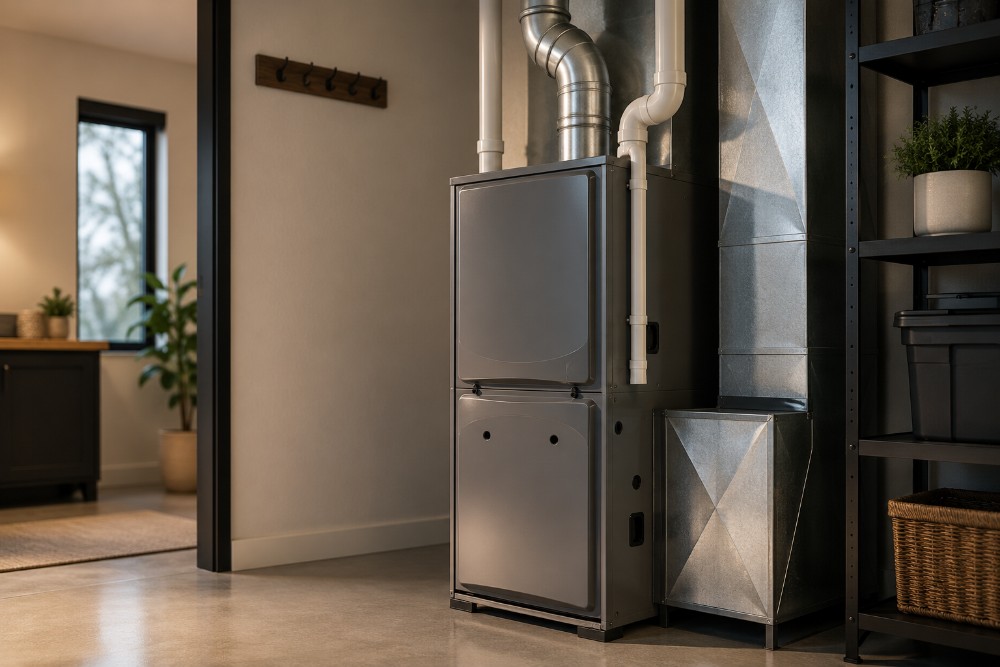
Cold weather has a way of exposing every furnace problem you didn’t know you had. The good news is that most of those problems are preventable with a bit of attention before the season starts. Here’s a simple checklist to work through before the temperature drops.
Replace or Clean the Air Filter
A dirty filter restricts airflow, forcing your furnace to work harder and reducing indoor air quality. Replace disposable filters or clean reusable ones before the heating season begins, then check monthly through winter.
Inspect the Thermostat Settings
Make sure your thermostat is functioning correctly and, if you have a programmable or smart model, set a schedule that matches your household’s routine. A properly calibrated thermostat prevents unnecessary cycling and wasted energy.
Check Vents and Registers
Walk through your home and confirm that vents and registers aren’t blocked by furniture, rugs, or curtains. Restricted airflow makes rooms uneven and forces your system to run longer than necessary.
A furnace that hasn’t been inspected in over a year is far more likely to fail on the coldest night of winter than one with a documented service history.
Test the Ignition and Pilot System
Turn your furnace on before winter actually arrives to confirm it ignites properly and runs without unusual noises or smells. Catching an ignition issue in October is far less stressful than discovering it in January.
Inspect the Heat Exchanger
A cracked heat exchanger can allow carbon monoxide into your home and should always be checked by a licensed technician. This is one of the most important safety items on any fall maintenance visit.
Clear Debris From Outdoor Vents
If your furnace vents outside, make sure the exterior vent isn’t blocked by leaves, nests, or debris. A blocked vent can affect combustion safety and system performance.
Schedule a Professional Tune-Up
A licensed technician can test components a homeowner can’t safely check, including gas pressure, carbon monoxide levels, and electrical connections. Annual professional maintenance is the single best way to avoid a mid-winter breakdown.
When to Call a Professional
DIY tasks like filter changes and clearing vents are safe to handle yourself. Anything involving gas lines, the heat exchanger, or electrical components should always be left to a licensed technician.